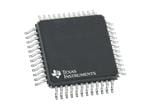
TPS92662AQPHPRQ1

Texas Instruments
595-TPS92662AQPHPRQ1
TPS92662AQPHPRQ1

制造商:

说明:
LED照明驱动器IC 12-Channel high-brig htness LED matrix m

ECAD模型:
下载免费库加载程序,将此文件转换,以供您的ECAD工具使用。了解详情。

库存量: 2,612

库存:
2,612 可立即发货
生产周期:
18 周 大于所示数量的预计工厂生产时间。
最少: 1   倍数: 1
单价:
¥-.--
总价:
¥-.--
预估关税:
封装:
整卷卷轴(请按1000的倍数订购)

定价 (含13% 增值税)

数量 单价
总价
剪切带/MouseReel™
¥58.1498 ¥58.15
¥44.9175 ¥449.18
¥41.5275 ¥1,038.19
¥37.8889 ¥3,788.89
¥36.1487 ¥9,037.18
¥35.0752 ¥17,537.60
整卷卷轴(请按1000的倍数订购)
¥34.1599 ¥34,159.90
¥33.4141 ¥66,828.20
† ¥15.00 MouseReel™费将被加上并在购物车计算。所有MouseReel™订单均不可撤消和退回。

产品属性 属性值 选择属性
Texas Instruments
产品种类: LED照明驱动器IC
RoHS:  
12 Output
Boost, Buck
HTQFP-48
60 V
4.5 V
Adjustable
TPS92662A
- 40 C
+ 125 C
Fault Detection, Fault Diagnostic, Hybrid Dimming/Phase Shift, I2C Control, Integrated Switch
Reel
Cut Tape
MouseReel
商标: Texas Instruments
输入电压: 4.5 V to 60 V
湿度敏感性: Yes
安装风格: SMD/SMT
通道数量: 12 Channel
产品: LED Drivers
产品类型: LED Lighting Drivers
工厂包装数量: 1000
子类别: Driver ICs
类型: LED Matrix
单位重量: 251.400 mg
找到的产品:
要显示类似产品,至少选中一个复选框
要显示该类别下的类似产品,请至少选中上方的一个复选框。
已选择的属性: 0

此功能要求启用JavaScript。

CNHTS:
8542399000
USHTS:
8542390090
TARIC:
8542399000
ECCN:
EAR99

TPS92662A-Q1 LED矩阵管理器

Texas Instruments TPS92662A-Q1 LED矩阵管理器通过提供单独的像素级LED控制实现全动态自适应照明解决方案。该器件包括四个子灯串,由三个串联的集成开关组成,用于绕过单个LED。各个子灯串允许器件接受单个或多个电流源。TPS92662A-Q1具有一个可编程的皮尔斯晶体振荡器驱动器。根据制造商对石英晶体或陶瓷谐振器的建议选择驱动器强度,实现最佳性能。该器件还包括驱动强度可选的时钟缓冲器。通过改变时钟缓冲器的驱动强度,可控制时钟信号的上升和下降时间以及EMI。必要时可禁用时钟缓冲器,以消除时钟信号产生的噪声并最大程度降低EMI。

IS32LT3175N/P Single-Channel Linear LED Drivers

ISSI IS32LT3175N/P Single-Channel Linear LED Drivers come with fade in/out and PWM dimming. The regulators serve as a stand-alone LED driver-configurable from 20mA to 150mA with external resistors, no microcontroller is necessary. A logic level “courtesy light” signal from the PWM pin can be interfaced to precisely drive the LED channel. The IS32LT3175P obtains a positive polarity PWM signal. In addition, the IS32LT3175N obtains a negative polarity PWM signal. The regulator integrates a 63-step fade-in and fades out the algorithm (Gamma correction). This causes the output LED current to increasingly rise up to the full source value after the EN pin is pulsed.