




Apex Microtechnology Motor Drive Solutions

Apex Microtechnology offers a range of solutions for motor drive applications. Numerous motion control applications rely on permanent magnet DC motors due to the ease of integration into control systems compared to AC motors. These DC motors, whether brushed or brushless (BLDC), offer precise control over speed, torque, or position, making them a popular choice in various applications. Engineers can employ either type of DC motor, with the appropriate supporting components to meet specific application demands. The reliability of the motor in these applications is paramount, but the devices that drive these motors are equally important. Precision control in many motion control applications requires a high-power analog to generate movement. Designing power circuitry that is highly reliable and highly stable while balancing electrical and thermal management issues can be very challenging. Apex Microtechnology enables engineers to solve these challenges by offering commercial off-the-shelf (COTS) integrated power modules, power operational amplifiers, and PWM amplifiers designed for motor drive applications.
Whether driving DC brushed or brushless motors, Apex Microtechnology offers more than 50 models of high-current integrated power modules, power operational amplifiers, and PWM amplifiers with output capabilities ranging from 1A to 200A and wide supply-voltage operation up to 1200V. These single-package solutions incorporate various integration interfaces, including DSP, MCU, or analog inputs, as well as over-temperature and short-circuit protection and cycle-by-cycle current limiting to handle start-up current without derating.
Brushless DC Motors (BLDC)

Brushless DC motors use the same principles of attraction and repulsion as brushed motors, but manufacturers construct them differently. Instead of relying on a mechanical commutator and brushes, brushless motors use electronic commutation to rotate the stator's magnetic field, requiring active control electronics. In a brushless motor setup, the rotor integrates permanent magnets, while the stator houses windings. The number of windings, termed phases, in a brushless motor varies; 3-phase configurations are the most common.
Driving a 3-phase brushless motor requires that each phase alternate between the input supply voltage and ground. Engineers typically achieve this requirement using three "half-bridge" drive circuits. Each circuit uses two switches, which may be bipolar transistors, IGBTs, or MOSFETs, depending on the voltage and current requirements. Various drive techniques exist for 3-phase brushless motors. The simplest is the trapezoidal method, also known as 120-degree commutation, which resembles the commutation method used in DC brushed motors. More advanced methods, such as sine (or 180-degree) commutation, offer superior performance by continuously driving current through all three motor phases.
For this, Apex Microtechnology offers a device family of 3-phase PWM amplifiers and Silicon Carbide Integrated Power Modules designed to drive brushless DC (BLDC) and permanent magnet synchronous motors (PMSM). These devices include three independent half-bridges that easily integrate into microcontroller or DSC control systems. These 3-phase drivers feature under-voltage lockout (UVLO) and active Miller clamping to reduce switching noise and improve reliability.
Featured Products for BLDC Motors
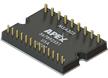
Apex Microtechnology MSA303/MSA303A Integrated Power Modules
Fully integrated three-phase drivers developed to drive BLDC and PMSM motors, or DC/AC converters.
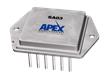
Apex Microtechnology SA03 30A 100V PWM Amplifier
Delivers up to 3000W to the load and features a 22.5kHz switching frequency
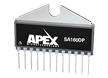
Apex Microtechnology SA160 10A H-Bridge Motor Driver ICs
Low-cost solutions for driving brush-type motors and reactive loads.

Apex Microtechnology SA303 Three-Phase Switching Amplifier ICs
Low-cost 60V pulse width modulation (PWM) motor-driver ICs.
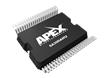
Apex Microtechnology SA306 Low-Cost PWM Brushless Motor Driver ICs
Designed to drive three-phase Brushless DC (BLDC) motors.
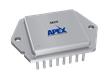
Apex Microtechnology SA310 Brushless DC Motor Driver
Used to drive Brushless DC and Permanent Magnet Synchronous motors or DC/AC converters.

Apex Microtechnology SA57 PWM Amplifier with Integrated Gate Driver
Delivers up to 17A of output current for driving brush-type DC motors.

Apex Microtechnology SA53 Amplifier with Integrated Gate Driver
Monolithic, low-cost single-package solution for driving brush-type DC motors.
Brushless DC Motors Block Diagram

BLDC Motor Drive Resources
Brushed DC Motors

DC motors utilize wound coils of wire to generate a magnetic field. Within a brushed motor, these coils are free to rotate, constituting the "rotor" responsible for driving the shaft. Typically, manufacturers wind the coils around an iron core, but some create "coreless" brushed motors with self-supporting windings. The stationary component of the motor is known as the "stator", which employs permanent magnets to establish a fixed magnetic field. To induce torque and initiate rotor motion, the rotor's magnetic field must continuously rotate, attracting and repelling the fixed stator field. Achieving this rotation involves a sliding electrical switch comprising a commutator and fixed brushes. As the rotor revolves, different sets of the rotor windings are constantly switched on and off by the commutator, causing the rotor to spin.
To power a brushed motor, a DC voltage is applied across the brushes, allowing current to flow through the rotor windings and initiate motor movement. For total control over speed, torque, and direction, an "H-bridge" composed of electronic switches - transistors, IGBTs, or MOSFETs - is used to allow bidirectional motor operation. The motor speed or torque can be controlled by pulse width modulating (PWM) one of the switches. Most brushed motors use PWM controllers that utilize H-bridge circuitry consisting of two high-side and two low-side switches. For example, when the motor needs to increase speed, the controller increases the duty cycle (the ratio of the pulse to the pulse period). The new PWM signals arrive at the gate drivers, opening the transistors for an extended period to let more current flow. To rotate a BDC motor in one direction, the controller opens the H-bridge switches diagonally. Because the switching process introduces a delay, reversing the motor's rotation can turn on all four transistors simultaneously. To prevent current and voltage leakage, the user can add dead time, which allows the controller to open all transistors during transitions.
Apex Microtechnology has designed high voltage and high current devices that do this for the user, featuring integrated gate driver logic with dead-time generation and shoot-through prevention. Apex's diverse portfolio of linear amplifiers, PWM amplifiers, and SiC integrated power modules meets the varied demands of modern motor drive applications. Seamlessly incorporated into motor drive systems, our solutions ensure optimal performance, efficiency, and reliability.
Featured Products for Brushed DC Motors
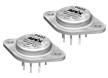
Apex Microtechnology PA02 & PA02A Power Operational Amplifiers
Wide-band, high-output current operational amplifiers.

Apex Microtechnology PA05 Power Operational Amplifiers
Extends the performance limits of power amplifiers in slew rate and power bandwidth.

Apex Microtechnology PA10 High Temp Power Amplifiers
5A, 100V amplifiers with a 4MHz gain bandwidth.
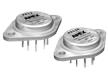
Apex Microtechnology PA12 Class A/B Power Amplifiers
10A, 90V power operational amplifiers with low thermal resistance (1.4°C/W).

Apex Microtechnology PA74/A & PA76/A Class C Power Amplifiers
Dual-power op-amps featuring 2.5A x 2 of continuous output current on 5V to 40V single supplies.
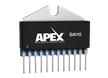
Apex Microtechnology SA110 Silicon Carbide Half H-Bridge Module
High-current, high-voltage module that uses Silicon Carbide (SiC) technology.

Apex Microtechnology SA111PQ碳化硅半桥电源模块
Expand thermal efficiency and power density in analog modules.
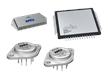
Apex Microtechnology Power Operational (Linear) Amplifiers
Portfolio of products designed for applications that require high current and high voltage.
Brushed DC Motors Block Diagram
